A diet, not just a meal.
We start from base recipes and adapt each one to your dog, nothing is fixed. Here's what can go into their diet.
Start their diet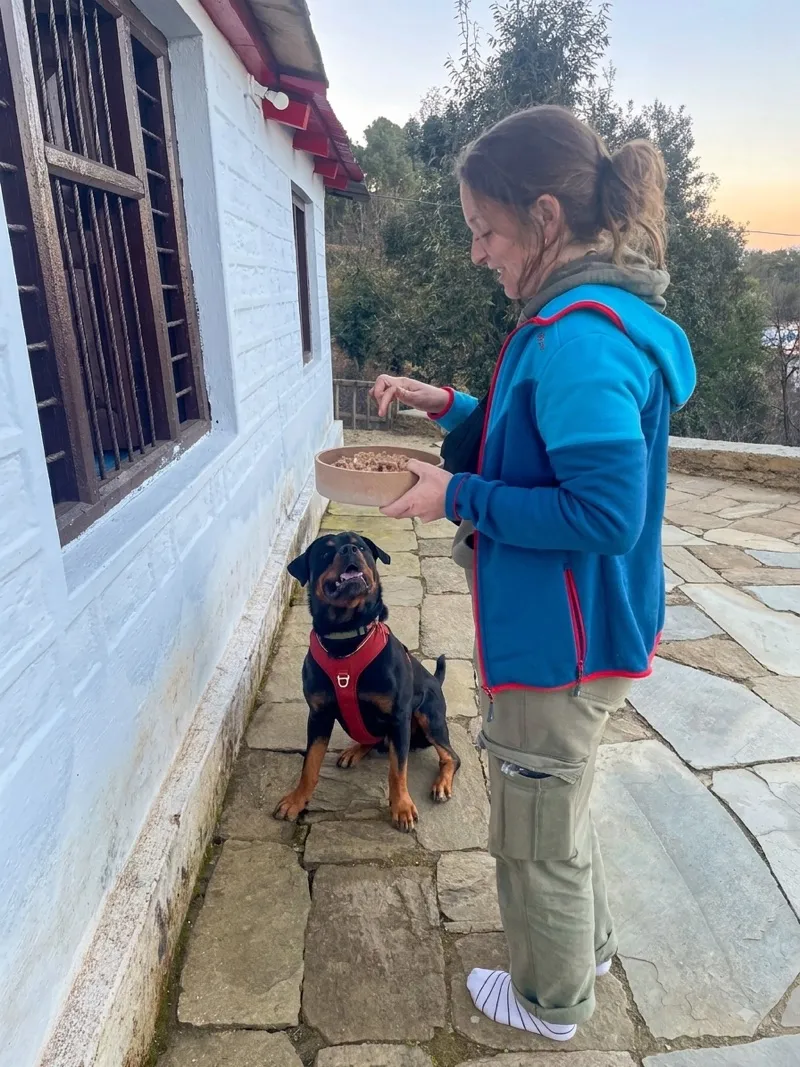
The recipes
We start from base recipes and adapt each one to your dog, nothing is fixed. Here's what can go into their diet.
Protein
We rotate between different animal proteins throughout your dog's diet.
Protein builds and repairs muscle, skin, coat and a strong immune system, an essential part of your dog's diet.
Proteins we use: chicken, buffalo, pork, mutton, mackerel, sardines, organ meat, egg, tilapia.
Fruits & Vegetables
Local and seasonal.
Fruits and vegetables are sourced locally, and recipes rotate through the year to follow the seasons. They bring fibre and a wide range of vitamins and antioxidants to the bowl.
Carbohydrates
A measured portion of digestible carbohydrate gives your dog's body its most direct source of glucose, fuel for the brain.
Carbs we use: sweet potato, brown rice, millet, quinoa, oats.
Fats
Fat gives your dog the energy to walk, play, and run, and helps the body absorb fat-soluble vitamins.
Fats we use: hemp oil, fish oil, sunflower seed oil, MCT oil, coconut oil, olive oil, ghee.
Supplements
Supplements close specific gaps that whole food can't cover, like vitamin D, iodine and calcium, for example.

Add-ons
Everything your dog eats can come from the same kitchen.
Add bone broth or treats to your monthly subscription; both are built into your dog's plan the same way meals are. An active dog in training needs something different from an older, calmer dog, so treats adapt too. Both treats and bone broth count toward your dog's daily calories, so the balance holds.
How we build a bowl
The standards we follow
We formulate every recipe against FEDIAF 2024 and AAFCO 2016, the nutrient guidelines used in Europe and the US. They set the minimum and maximum amounts of protein, fat, vitamins and minerals a dog's diet needs at each life stage.
Balance over time, not meal by meal
A single bowl doesn't need to contain every nutrient in perfect proportion. What matters is the diet as a whole, across a week, a season, a life stage. That's why we rotate proteins, vegetables and fats through your dog's plan instead of repeating the same recipe every day.
What this means in practice
We check every recipe against a full nutrient panel. Where whole food can't cover a gap on its own (for example, vitamin D, iodine, zinc), we add a supplement to close it.
Why this way of feeding works
Better digestibility
Most shelf-stable dog food is highly processed to survive months in a bag. A 2021 study comparing minimally processed, home-style diets to extruded kibble found dogs digested significantly more of what they ate on the minimally processed diets, with smaller, more compact stools to show for it. Less going to waste, more actually being used.
Better skin and coat
Meals cooked to preserved fat sources. Fatty acids are essential for skin and coat health, and dogs can't produce them on their own; they have to come from their food.
A diet that changes with your dog
There's no single fixed formula for a healthy diet. A dog's needs change with growth, weight, activity and age. Meals are adapted to your dog's real-time needs.
Who is it for?
Every plan adjusts for:
- Adult dogs (above 1 year old).
- Seniors.
- Recovery, done in coordination with your vet.
- Weight management.
- Sensitive digestion.
- Specific allergies and intolerances.
For any diagnosed condition, we ask for your vet's confirmation before finalising a recipe.
Our community friends
You feed the dogs in your neighbourhood too? We have a special menu for our stray friends to meet their basic needs, with the same convenience as always. Tell us how many dogs, and we'll send you their weekly food.
Fixed price per dog: ₹2,099/month (excluding delivery, no personalisation).